Your computer. Your data.
Your OS.
While big tech builds AI operating systems that harvest your data and lock you in, OpenTo gives you an OS that runs lean, protects your privacy, and only loads what you actually need. No bloat. No surveillance. No subscriptions. Just your machine, working for you.
Why it actually works
Built like biology — not like a corporation
Your body doesn't pre-load every protein it might ever need — it builds what's necessary and recycles it. That's why a single cell can do more than most operating systems. OpenTo works the same way: load only what you need, use it, clean up. No bloat accumulates. No junk files. No mystery processes draining your battery.
The deep insight from biology
Your body has multiple checkpoints before anything runs — promoters, repressors, proofreading. OpenTo does the same for software: every app is cryptographically verified, capability-scoped, and time-limited before it touches your system.
Unlike closed AI operating systems that ask for blanket permissions, OpenTo earns trust every single time — because there's nothing permanently installed to abuse it.
Why this matters for you
Every OS you've used was designed to accumulate — more apps, more data, more background services draining your battery. OpenTo is the first OS designed to stay light. Your computer performs like the day you bought it, because nothing lingers that you didn't explicitly choose to keep.
The complete biology → architecture mapping
A stable, self-maintaining substrate that builds and destroys functional structures as needed
Linux kernel + NixOS + runtime daemon — the minimal, stable environment
20,000 protein-coding genes — inert blueprints, only expressed when needed
Signed, versioned, content-addressed descriptions of every capability — inert until expressed
Reading DNA into mRNA — regulated by promoters, repressors, and checkpoints
Manifest lookup, cryptographic signature verification via transparency log, capability parsing
A generic, reusable machine that translates any mRNA into a working protein
A universal bytecode runtime — generic, reusable, never specific to any one app
Nothing crosses it without explicit receptor-mediated permission
Scoped, time-bounded tokens — nothing crosses without explicit user grant
Programmed cell death — orderly, deterministic self-destruction when the work is done
Sandbox destroyed, memory zeroed, tokens revoked. Zero residue. The machine is clean.
Try it yourself
Tap an intent. Watch it work.
Every app on OpenTo starts as a thought and ends with a clean slate. Click any example below to see the full lifecycle — materialize, use, dissolve.
See it in action
Say it. See it. Done.
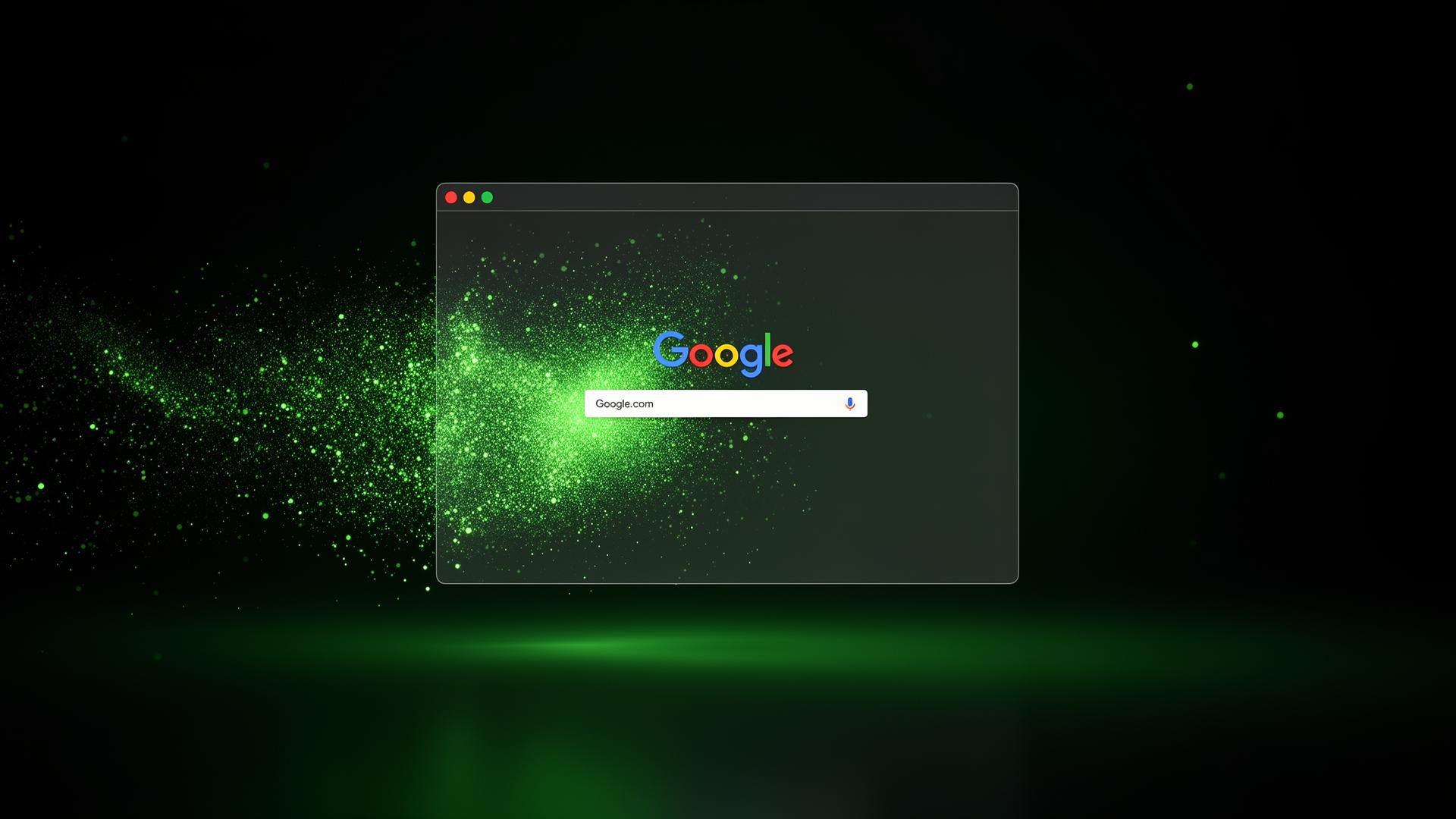
A browser materializes instantly
No Chrome install. No Firefox download. You express intent, and a secure browser surface appears — connected, sandboxed, ephemeral.
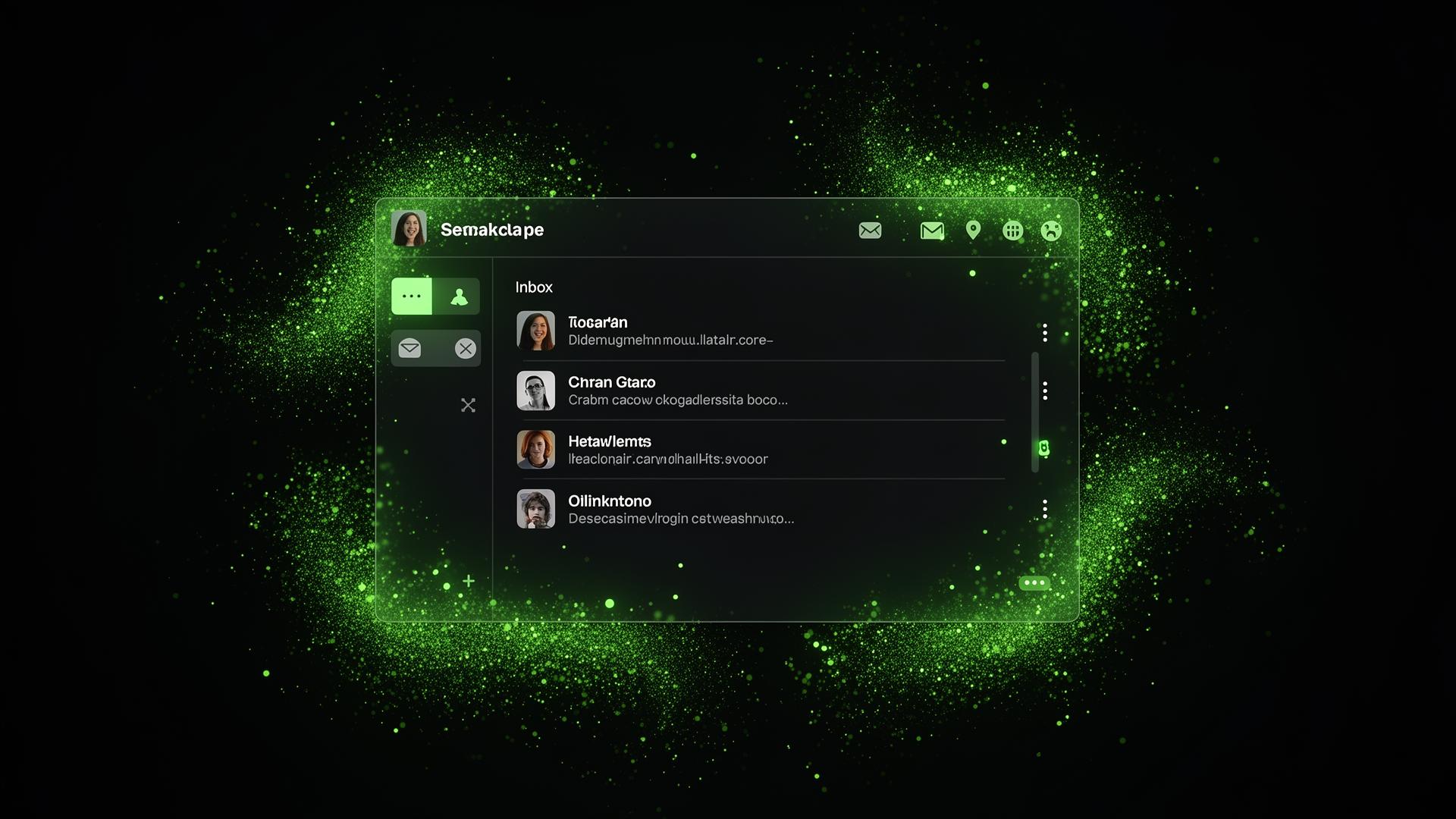
An email client forms around your data
OpenTo connects to your MCP server, pulls your emails, and generates a UI on the fly. When you close it, the surface dissolves — your data stays on your server.
Notifications without any frontend
Your backends — Slack, email, calendar — push notifications directly through MCP protocols. Red dots appear. No app is running. No frontend exists. Nothing is installed.
Only when you engage — "show me Bradden's message" — does a UI materialize around that specific interaction. When you're done, it dissolves. The notification dot clears. Back to nothing.
Protocols deliver data. No app polling. No background processes.
Frontend materializes only when the user asks for interaction.
After engagement, the surface self-destructs. Apoptosis.
Your OS listens, so you don't have to
During calls, the OS processes audio locally — surfacing term definitions, relevant docs from your machine, and real-time insights. No cloud transcription. No third-party app. It reads the meeting's "DNA" and forms helper cells on the fly.
When the call ends, ask "What are the next steps?" — it synthesizes action items and sends calendar invites through your connected accounts. Then the UI dissolves. Nothing remains.
Audio analyzed on-device. No data leaves your machine.
Surfaces relevant files from your local storage as terms are mentioned.
Generates next steps and sends calendar invites via MCP protocols.
See the difference
Close it and it's actually gone
You know that feeling when your computer gets slower every month? That's hundreds of "closed" apps still running in the background. On OpenTo, when you close something, it's truly deleted — memory freed, processes killed, disk cleaned. Your computer stays fast because nothing hides.
Hey, are we still on for 3pm?
PR is ready for review 🚀
Updated the design spec
Hi Bethany, here are my notes on the Q3 deck. The revenue projections look solid...
Your devices, your network
All your devices, one living network
Your laptop, phone, server, and collaborators — all connected through open protocols you own. No cloud middleman. No company holding your sync hostage. Data flows directly between your devices, encrypted end-to-end, like a nervous system that only you control.
End-to-end encrypted
Your data travels directly between your devices. No company can read it, sell it, or lose it in a breach.
No central server
If any single node goes offline, the rest keep working. Your network is as resilient as you are.
Instant sync
Changes propagate across your devices in milliseconds. No waiting for cloud uploads and downloads.
Why you'll switch
Relief from everything you hate about your OS
Bloated storage. Constant updates. Apps tracking you in the background. You've been tolerating it because there was no alternative. There is now.
Reclaim your storage
Stop wasting gigabytes on apps you opened once. Software appears when you need it and vanishes when you don't. Your disk stays yours.
Nothing spies on you
Every app runs in a sealed sandbox. It can't read your files, track your location, or phone home. Unlike closed AI operating systems, OpenTo doesn't need your data to function.
No more update anxiety
You'll never see "Restart to update" again. Every time you open something, it's already the latest version. No nagging. No forced reboots.
Your data never leaves
OpenTo doesn't store your data on someone else's cloud. Your files, your keys, your backends — all on infrastructure you control. Period.
Just say what you need
No app stores. No menus. No searching. Tell your computer what you want in plain language and the right tool materializes instantly. This is what AI in an OS should feel like.
Always fast, always clean
Your computer doesn't slow down over time. When you close something, it's truly gone — memory freed, processes killed, disk clean. Day 1,000 feels like day one.
The Flow
Intent → Transcription → Grant → Materialize → Intent → Grant → Materialize → Teardown
Modeled after cellular biology — a human cell doesn't pre-install every protein. It transcribes what it needs, uses it, and degrades it. OpenTo does the same with software.
Intent
"Send email to Bethany about the Q3 deck"
You type or speak what you need. A local LLM parses your natural language into a structured intent — no menus, no app drawers, just words.
Transcription
Manifest lookup → signature verification
The intent resolves to a signed manifest in the registry. ribosomed fetches it, verifies cryptographic signatures via Sigstore, and parses capability requirements — like a ribosome reading mRNA.
Capability Grant
Scoped, time-bounded, revocable tokens
The Capability Broker negotiates fresh, scoped permissions — camera access, file read, network to your MCP server. Each token is time-bounded and dies with the expression. No blanket permissions, ever.
Sandbox Materialization
WebAssembly instantiation in < 2 seconds
A WebAssembly sandbox spins up with only the granted capabilities wired in. The expression connects to your backends via MCP, renders a UI through Wayland, and you're working — in under 2 seconds cold.
Teardown
Deterministic destruction → 0 bytes residue
Close the expression and it's gone. Sandbox destroyed, memory zeroed, capability tokens revoked. Only your explicit saves persist to the encrypted vault. The machine is exactly as it was before.
Built on Giants
Open source all the way down
Linux changed servers. Red Hat proved open source is enterprise-ready. NixOS proved builds can be reproducible. OpenTo is the next chapter: an OS where software itself is ephemeral.
The same battle-tested kernel that powers 96% of the world's top servers. LTS releases. Proven. Unbreakable.
Content-addressed builds, atomic rollbacks, and the Nix store. Every artifact is immutable, every deployment reproducible.
The universal bytecode. Near-native performance in a sandboxed, capability-controlled runtime. Write once in any language.
The Model Context Protocol connects expressions to your data — your email server, your files, your APIs. Zero vendor lock-in.
Don't take our word for it — try it
Boot a full OpenTo session right here in your browser. Watch apps materialize from plain English, use them, and watch them dissolve. No download required. See exactly what you'd be getting.
Launch It Now — FreeNo sign-up · No download · Runs in your browser
This is your fight too
Big tech is building an AI OS that owns you
OpenAI wants to put their OS on your computer and phone. An OS that needs your data to work. OpenTo is the open-source answer — built by people who believe your computer should serve you, not surveil you. We're assembling the team. If you've ever said "there has to be a better way" — this is it.